
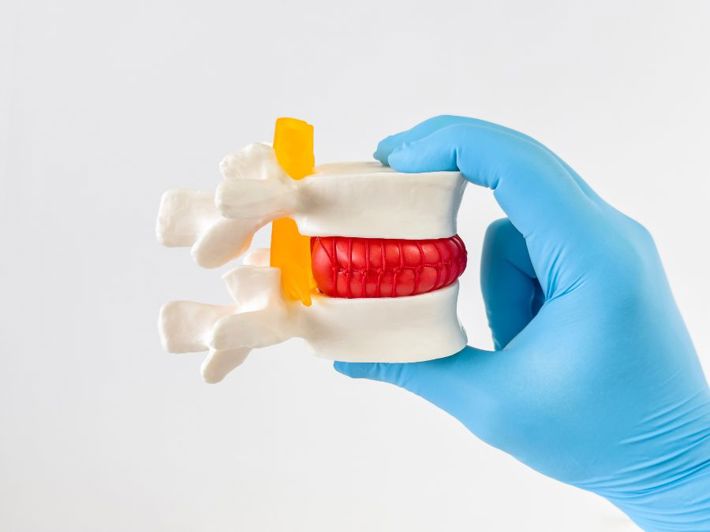
Many people suffer from bothersome disc pain that may worsen over time, limiting their ability to carry out daily activities. When conservative treatments,such as medications and physical therapy, fail to relieve the pain, surgical treatment may become a last resort. (1)
Fortunately, surgical techniques have advanced significantly, allowing patients to benefit from endoscopic disc surgery instead of traditional open surgery. In this article, we highlight endoscopic disc surgery, explain its advantages, how it is performed, and what to expect during recovery. (1)
What Is Endoscopic Disc Surgery?
Endoscopic disc surgery is a minimally invasive procedure in which the damaged portion of a herniated disc that is compressing the nerves is removed. This is done using a thin endoscope inserted through a very small incision in the back,no more than 1 cm,instead of the large incision used in traditional surgery. (2)
Advantages of Endoscopic Disc Surgery
Compared with conventional open surgery, endoscopic disc surgery offers several benefits: (2)
- Less pain: The small endoscopic incisions result in less postoperative pain.
- Faster recovery: Patients usually leave the hospital on the same day or the following day.
- Smaller scars: The procedure leaves minimal scarring.
- Less tissue damage: Lower risk of tissue injury and complications such as bleeding and infection.
- Quicker return to activities: Patients can resume daily activities sooner than with traditional surgery.
Who Are Candidates for Endoscopic Disc Surgery?
Most disc patients do not require endoscopic surgery. It is recommended only as a last option for individuals who do not respond to non-surgical treatments (pain relievers and physical therapy) after an adequate treatment period and who suffer from: (2)
- Severe, intolerable pain.
- Muscle weakness caused by disc compression that affects daily activities.
- Persistent numbness and severe nerve compression, which may lead to urinary or bowel incontinence.
This procedure is not suitable for multiple or complex disc cases, where open surgery may be required instead. (2)
How Do I Prepare for Endoscopic Disc Surgery?
Follow your doctor’s instructions carefully before the procedure. You may be advised to temporarily stop taking certain medications, such as blood thinners, and to fast the night before surgery. (3)
Steps of Endoscopic Disc Surgery
The procedure usually takes up to one hour and is performed as follows:(4)
- General or local anesthesia is administered.
- The surgeon makes one small incision,or two even smaller ones,on the side of the back and uses specialized X-ray guidance to accurately locate the herniated disc.
- The endoscope is inserted through the incision.
- The damaged portion of the disc compressing the nerves is removed.
- The incisions are closed, and a small dressing is applied.
Recovery After Endoscopic Disc Surgery
Recovery after endoscopic disc surgery is generally relatively fast. Patients can usually go home on the same day or the next day and return to most normal activities within less than a month. (3)(5)
Here are some tips to facilitate recovery:
- Follow your doctor’s instructions: Your physician will guide you on postoperative care and prescribed medications.
- Move early: Walking and gentle movement as soon as possible after surgery help prevent joint stiffness and improve blood circulation.
- Avoid strenuous activities and sudden movements: Such as heavy lifting, twisting, or bending for several weeks.
- Return to routine gradually: Resume daily activities slowly, avoid strenuous tasks, listen to your body, and stop if you experience pain.
- Attend follow-up appointments: Keep all scheduled follow-up visits to ensure proper healing and assess surgical outcomes.
Risks of Endoscopic Disc Surgery
Although generally safe, endoscopic disc surgery—like any surgical procedure—may carry some risks, including:(3)
- Infection.
- Excessive bleeding.
- Injury to nearby nerves.
- Cerebrospinal fluid leakage.
- Adverse reactions to anesthesia.
- Surgical failure, which may require additional surgery.
What Are the Outcomes of Endoscopic Disc Surgery?
Most patients experience significant improvement after endoscopic disc surgery. Studies indicate a success rate of approximately 80%. However, complete success cannot be guaranteed, and there is a possibility of disc recurrence.(3)
When Should You Contact Your Doctor?
- If you experience severe pain that does not improve with painkillers.
- If you notice redness, swelling, discharge, or fever at the surgical site.
- If numbness or weakness in the leg worsens or does not resolve.
- If you develop any other concerning symptoms.
Book an appointment with the Neurosurgery and Spine Surgery Department at Al-Ahli Hospital for accurate evaluation and personalized treatment recommendations.
References
- Endoscopic Diskectomy, ScienceDirect
- Endoscopic Diskectomy, AAOS
- Diskectomy, Mayo Clinic
- Diskectomy, NCBI Bookshelf