
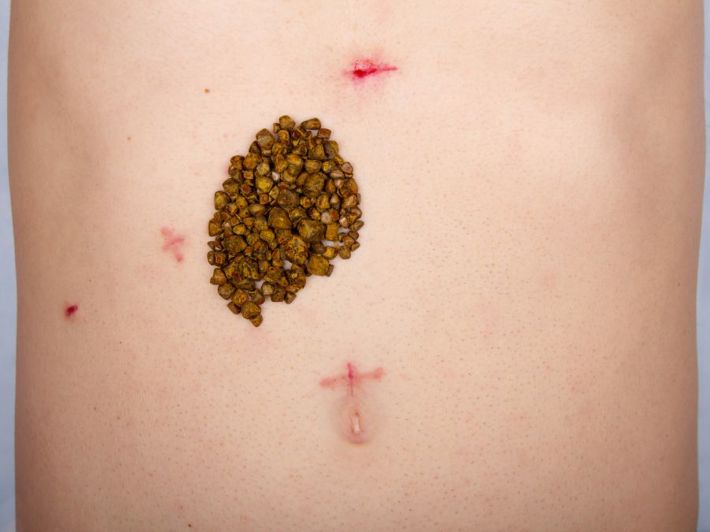
Laparoscopic gallbladder removal is one of the most commonly performed general surgeries worldwide. Today, most surgeons prefer it over traditional open surgery due to its simplicity and faster recovery.
Here is an overview of the procedure.
Laparoscopic Gallbladder Surgery
Laparoscopic gallbladder surgery (laparoscopic cholecystectomy) is a common procedure in which the gallbladder is removed using a thin laparoscope inserted through very small incisions in the abdomen. It is now the preferred option instead of open surgery (a large abdominal incision measuring 10–20 cm), although open surgery may still be necessary in certain cases.(2)
This procedure is characterized by being simple and safe. It involves only four small abdominal incisions, each no larger than 1 cm. Recovery is typically quick, and most patients can return home the same day.(1)
Indications for Laparoscopic Gallbladder Surgery
Laparoscopic gallbladder removal is the most common treatment for gallstones and their complications.
Gallstones often cause no symptoms; however, in some cases, they may lead to severe symptoms such as intense abdominal pain, nausea, and vomiting. Gallstones can also block the bile ducts and cause inflammation of the gallbladder itself or pancreatitis, which makes complete gallbladder removal necessary.(3)
In addition, laparoscopic gallbladder removal may be recommended in the following cases: (2)
- Large gallbladder masses that may have the potential to become cancerous
- Increased risk of gallbladder cancer due to family history or other risk factors
Steps of Laparoscopic Gallbladder Surgery
Preoperative Preparation
- Comprehensive medical evaluation: to ensure the patient is fit for surgery
- Surgical consent: the surgeon explains the procedure in detail, followed by signing a consent form
- Preoperative instructions, which may include:
- Fasting from food and drink the night before surgery
- Avoiding smoking
- Continuing only approved medications on the morning of surgery as instructed by the physician
- Stopping certain medications if advised, including blood thinners and some dietary supplements (4)
Surgical Procedure
- The surgery is performed under general anesthesia
- The surgeon makes 3–4 small incisions near the navel
- A thin tube is inserted through one incision to inflate the abdomen with carbon dioxide gas, creating space for the procedure
- A small camera is inserted through one incision, and surgical instruments through another, to remove the gallbladder
- The incisions are closed using sutures or surgical staples(4)
- The procedure typically lasts about one to one and a half hours.(1)
After Surgery
The patient is transferred to the recovery room until fully awake from anesthesia and is given pain relief as needed. Once stable and free of complications, most patients are able to return home on the same day.(1)
At Al-Ahli Hospital, we take pride in having highly skilled surgeons performing laparoscopic gallbladder removal and many other general surgeries. For more information, please feel free to contact us.
Recovery After Laparoscopic Gallbladder Surgery
Recovery usually takes around two weeks.
- Pain: Mild pain at the surgical site is normal, as well as shoulder pain caused by the gas used during surgery. This typically resolves within one to two days. Prescribed pain relievers can help manage discomfort.
- Expected symptoms: Some patients may experience temporary symptoms such as diarrhea, constipation, gas, bloating, or nausea.
- Diet: The doctor may recommend a light diet initially, followed by gradual return to a normal diet.
- Showering: Showering is usually allowed the day after surgery unless otherwise advised by the doctor.
- Movement: Gradual walking is encouraged as tolerated. Most patients can resume normal activities after about one week. If the job involves heavy physical work or lifting, the doctor should be consulted before returning to work.
- Follow-up: A follow-up visit with the surgeon is essential as scheduled, or sooner if complications occur, such as fever, severe pain, bleeding, or persistent vomiting.(1)(4)
Risks of Laparoscopic Gallbladder Surgery
Gallbladder removal is a safe and effective procedure for treating gallstones and related problems. However, as with any surgery, rare complications may occur, including:
- Risks related to general anesthesia
- Bile leakage
- Infection
- Injury to nearby organs
- Pancreatitis
References
- Cleveland Clinic - Cholecystectomy (Gallbladder Removal)
- Mayo Clinic - Cholecystectomy (gallbladder removal)
- NHS - Gallbladder removal
- SAGES - GALLBLADDER REMOVAL SURGERY (CHOLECYSTECTOMY)


