

Some people experience uncomfortable reactions or symptoms when drinking milk. This can generally be explained by one of two possibilities: lactose intolerance or milk allergy. Although many confuse the two, they are completely different in terms of causes, symptoms, and management. This article explains the differences, helping you understand each condition and how to handle it.
Difference Between Lactose Intolerance and Milk Allergy
Here’s a brief overview followed by a detailed explanation:
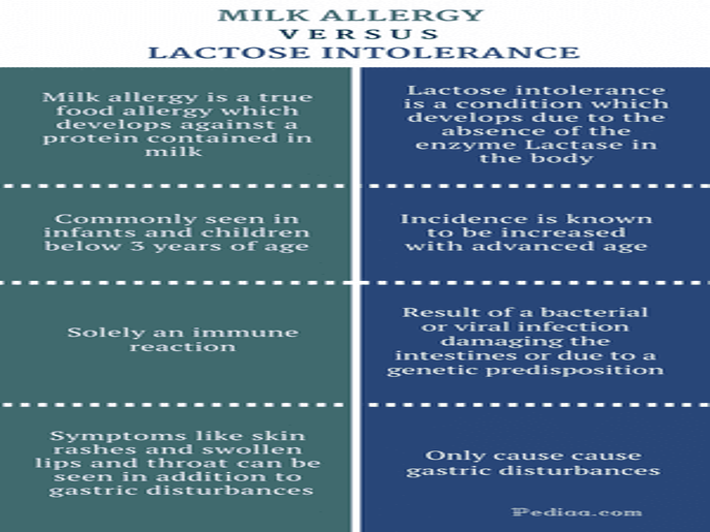
Different Causes
- Lactose intolerance (sometimes called lactose sensitivity) is a digestive problem, where the body lacks the enzyme needed to break down lactose (milk sugar). This causes lactose to accumulate in the intestines and ferment by gut bacteria, leading to digestive symptoms like gas and bloating.
- Milk allergy, on the other hand, is a true allergy. The immune system treats milk protein as harmful, triggering classic allergy symptoms such as skin rash, itching, and sometimes digestive symptoms as well. (1)
Different Age Groups
- Lactose intolerance is more common in older children and adults, usually after age two.
- Milk allergy is more common in infants under 1 year and often resolves by ages 3–5, although it can persist into adulthood in rare cases. (2)
Different Severity
- Lactose intolerance causes uncomfortable digestive symptoms but is not life-threatening.
- Milk allergy is a food allergy and can range from mild to very severe, potentially causing serious reactions such as difficulty breathing, swelling, wheezing, and in rare cases, life-threatening anaphylaxis if not treated promptly. (3)
Different Symptoms
Lactose Intolerance
Symptoms are digestive only, appearing 30 minutes to 2 hours after consuming milk or dairy products: (4)
- Gas and bloating
- Diarrhea
- Nausea or occasional vomiting
- Abdominal cramps
Milk Allergy
Symptoms include digestive and allergic reactions, usually appearing within minutes, though sometimes delayed by a few hours: (4)
- Skin rash or hives
- Swelling of the face and lips (mild cases may involve tingling or itching in the mouth/lips)
- Wheezing
- Runny nose
- Throat tightening
- Difficulty swallowing
- Difficulty breathing
- Blood in stool
- Severe allergic reaction (anaphylaxis) with difficulty breathing, loss of consciousness—requires immediate emergency treatment
Different Treatment and Management
- Milk allergy: Avoid all cow’s milk and dairy products completely.
- Lactose intolerance: Milk and dairy can usually be consumed in smaller amounts or lactose-free alternatives to reduce symptoms. (2)(5)
Lactose Intolerance Management:
- Reduce (not eliminate) dairy intake; moderate consumption of cheeses, yogurt, butter, and cream is often tolerated.
- Prefer lactose-free or low-lactose products for frequent digestive issues.
- Plant-based milks (almond, soy, etc.) are lactose-free options.
- Consult a pharmacist about lactase enzyme supplements to reduce symptoms.
- Rarely affects infants; consult a doctor for low-lactose or lactose-free formulas if needed.
Milk Allergy Management:
- Avoid all animal milk and derivatives (cow, goat, sheep, camel).
- Check food labels carefully for milk proteins or traces, including whey, casein, butter, cream, curd, dry milk.
- Plant-based milks (coconut, almond, soy, oat) are usually safe, unless fortified with milk proteins.
- For infants: breastfeeding is preferred. Formula-fed infants may require hydrolyzed or amino-acid-based formulas or plant-based options like rice or soy milk.
- Carry epinephrine for emergency treatment of severe allergic reactions.
Note: Lactose-free milk is not safe for children with milk allergy.
Consult a nutrition specialist at Al Ahli Hospital for personalized guidance on lactose intolerance or milk allergy management.
How to Tell the Difference
Do not self-diagnose or assume that milk should be avoided without medical confirmation.
- The best approach is to see a specialist who will perform a thorough assessment, take a detailed history, and may refer you to an allergist for confirmation. (2)
References
- News-Medical - How Does Milk Allergy Differ from Lactose Intolerance?
- TBDHU - Milk Allergy vs. Lactose Intolerance (PDF)
- Food Allergy Research & Education - Milk Allergy Vs. Lactose Intolerance
- Family Medicine Austin - How to Identify the Difference Between Milk Allergy and Lactose Intolerance and How to Deal with?
- Pregnancy Birth and Baby - Milk allergy and lactose intolerance in babies and children


