
Cesarean sections are common and generally safe, but in rare cases, they can lead to complications, including a cesarean section hernia.
According to large studies conducted in 2020, which included more than 275,878 women who had previously undergone a cesarean section, the incidence of hernia after a cesarean delivery may reach 5.6%. (1)
What is a Cesarean Section Hernia?
A cesarean section hernia is a type of surgical hernia that occurs when tissues or internal organs, such as the intestines, push through the abdominal wall at the site of the surgical incision or scar. (2)
This hernia occurs due to weakness in the abdominal muscles from the surgical incision made during a cesarean delivery. It can appear months or even years after the surgery, usually within three years after the cesarean section. (2)
Why Does a Cesarean Section Hernia Occur?
The abdominal wall consists of multiple layers of muscles and tissues that protect internal organs. During a cesarean section, these layers are cut to deliver the baby, which may weaken the abdominal wall. Sometimes, the incision does not heal properly, allowing intestines or other internal tissues to protrude through it, forming a cesarean section hernia. (3)
Some factors increase the risk of cesarean section hernia, including: (3)
- Multiple cesarean deliveries
- Excess body weight
- Engaging in strenuous activities after the cesarean section, such as lifting heavy objects or frequent coughing
- Old age
- Infection of the cesarean incision
- Health conditions that impair proper healing of the cesarean wound, such as diabetes or smoking
What Are the Symptoms of a Cesarean Section Hernia?
A cesarean section hernia appears as a bulge or protrusion near the cesarean scar. It may be small or grow noticeably larger, especially when coughing or straining. Women may also experience other symptoms, such as: (4)
- Discomfort or pain in the hernia, especially during abdominal strain or exertion such as coughing, sneezing, lifting heavy objects, bowel movements, physical effort, or prolonged standing
- Digestive issues, such as constipation, bloating, nausea, or vomiting
Is a Cesarean Section Hernia Dangerous?
While it may seem minor, a hernia should not be ignored, as it can lead to serious complications if untreated. One risk is a strangulated hernia, where tissues or intestines trapped in the hernia lose blood supply and die. This may require surgical removal of the affected intestines or could even become life-threatening. (4)
Some warning signs of a strangulated hernia include: (4)
- Severe redness or a change in the color of the bulge to purple
- Intense abdominal pain
- Nausea and vomiting
- Diarrhea
- Abdominal swelling
If you experience any of these symptoms, contact your doctor immediately, as emergency surgery may be required.
How Can a Cesarean Section Hernia Be Treated?
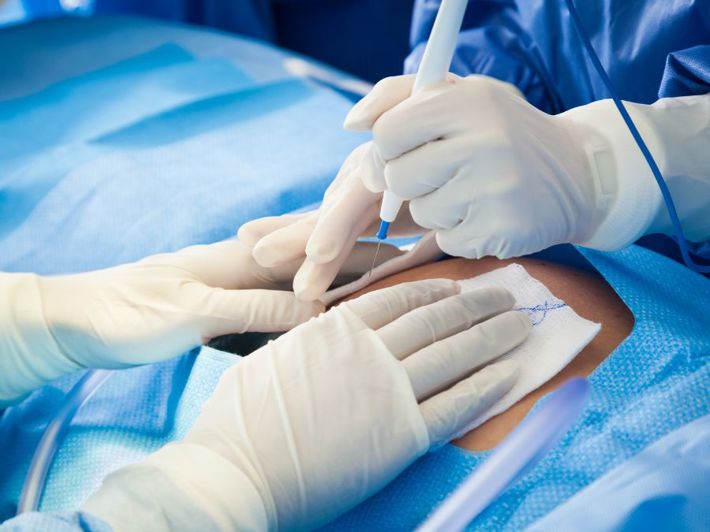
The only effective treatment for a cesarean section hernia is surgery, especially if it is large or symptomatic. Surgery involves closing the weakened area in the abdominal wall and reinforcing the hernia using a synthetic mesh. (5)
There are two surgical approaches, with the choice depending on the size of the hernia and the patient’s condition: (5)
- Open surgery : The surgeon makes an incision near the hernia to repair it.
- Laparoscopic surgery : Small incisions are made in the abdomen to access and repair the hernia.
To schedule a consultation or appointment regarding cesarean section hernia, contact the General Surgery Department at Al Ahli Hospital, equipped with the latest surgical techniques and precise equipment.
Can a Cesarean Section Hernia Be Treated Without Surgery?
No, surgery is the only definitive treatment. A hernia cannot heal on its own or with medication. However, supportive belts or abdominal binders can be worn temporarily to keep the hernia in place and reduce symptoms, but they do not treat the underlying cause. (4)
References
- NIH NLM - Incisional hernia after cesarean section: A systematic review
- MedStar Health - Incisional Hernia
- TeachMe Surgery - Incisional Hernia
- Verywell Health - Incisional Hernia and Its Treatment
- Johns Hopkins Medicine - Incisional Hernia

