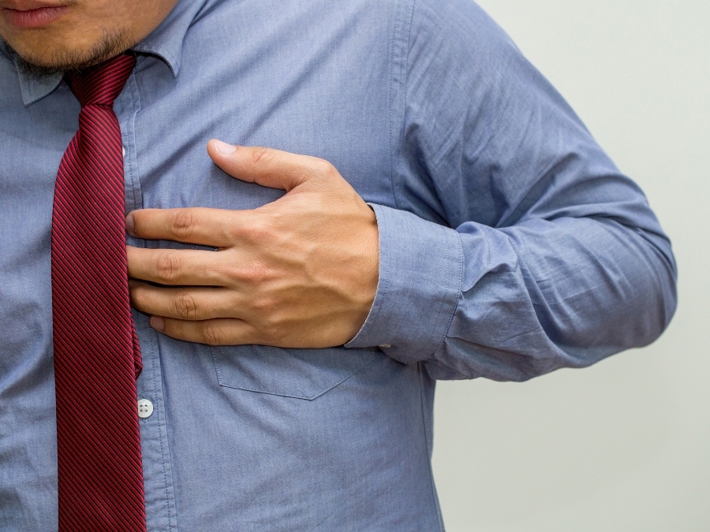
Many people think a heart attack happens suddenly and dramatically, like in the movies—placing a hand on the chest and collapsing immediately. In reality, most heart attacks start subtly, with mild discomfort in the middle of the chest, and the person may not realize this is a serious warning.
Every minute counts in a heart attack, and knowing the warning signs can be the difference between life and death.
Warning Signs of a Heart Attack
Not all heart attacks are sudden and severe; most begin gradually as discomfort or unease, which intensifies over time. Common symptoms include: (1)
- Chest pain or pressure (angina): A feeling of fullness, tightness, or heaviness in the center of the chest that lasts several minutes and may come and go.
- Pain in other parts of the upper body: May radiate to one or both arms (especially the left), back, jaw, neck, or stomach.
- Shortness of breath, with or without chest pain.
- Cold sweats.
- Nausea.
- Dizziness or feeling faint.
Differences Between Men and Women
- Chest pain is common in both men and women but more typical in men.
- Women are more likely to have atypical symptoms such as shortness of breath, nausea or vomiting, and vague pain in the back or jaw. (1)
- This can delay diagnosis in women, leading to more severe complications, with studies showing that women’s risk of death after a heart attack is more than double that of men. (2)
What to Do If You Suspect a Heart Attack
1. Call Emergency Services Immediately (999)
- Do not wait for symptoms to disappear.
- Every minute matters to save heart muscle and life.
- Ambulance teams can begin treatment immediately, including restarting the heart if it stops.
- Arriving by ambulance ensures priority treatment in the hospital.
Note: If you cannot call emergency services yourself, ask someone else to take you, and avoid driving unless absolutely necessary.
2. Why Quick Action Matters
- Every lost minute causes more damage to the heart, increasing the risk of death.
- Treatments are most effective within the first hour of symptom onset. (3)
3. Emergency Tips While Waiting for Help
- Call emergency services first.
- Chew aspirin: If advised, take one 325 mg aspirin or 4 baby aspirins (81 mg) to help prevent the clot from worsening.
- Sublingual nitroglycerin (if prescribed): Take one tablet and wait 5 minutes; if symptoms persist, take another. (4)
Rely on Specialized Emergency Care
At the Al Ahli Hospital Emergency Department, a specialized team is ready to provide immediate care using advanced medical equipment to ensure your safety and save lives in heart attack emergencies.
References
- American Heart Association - What Are the Warning Signs of Heart Attack?
- ESC - Women more likely to die after heart attack than men
- National Heart, Lung, and Blood Institute - Act in Time to Heart Attack Signs
- Heart Foundation - Heart attack warning signs


